The Truth: Why It’s Not Either/Or
As a personal trainer here in Naples at Galaxy Fit Lab, I’m often asked whether you should do cardio or weights for weight loss. It’s one of the most common questions clients bring up. My honest answer? You don’t have to choose one over the other – both cardio and strength training are important for burning fat. The truth is that the “cardio vs weights” debate misses the point, because the best results come from using both in a balanced program (fitfactoryfitness.com). In this guide, I’ll explain how each type of exercise helps you lose fat, which burns more calories, and why a combination of both is your ticket to maximum results. (And yes, I’ll share a sample weekly plan and why personal training can speed up your progress!)
How Cardio Burns Fat
Cardio (aerobic exercise) is basically any activity that raises your heart rate and gets you breathing harder – think running, cycling, swimming, or a high-intensity aerobics class. When you do cardio, your body burns calories during the workout to fuel your moving muscles. In fact, cardio is a calorie-burning powerhouse, especially for the time you spend doing it (justmovefitnessclub.com). For example, steady aerobic exercises like jogging or cycling can burn a significant number of calories in a 30-minute session. This immediate calorie burn helps create the caloric deficit needed for fat loss. Over time, regular cardio can improve your endurance and even train your body to become more efficient at using fat for fuel.
Not all cardio is created equal, though. Low-to-moderate intensity cardio (like brisk walking or a light jog) primarily uses oxygen and fat to generate energy, making it great for longer fat-burning sessions. High-intensity cardio (like sprint intervals or spinning) burns more total calories per minute and can even produce an afterburn effect. That afterburn effect – known as excess post-exercise oxygen consumption (EPOC) – means you continue burning extra calories for hours after a vigorous cardio session (justmovefitnessclub.com). High-Intensity Interval Training (HIIT), which alternates bursts of intense effort with short rests, is particularly good at triggering this afterburn. In short, cardio directly torches calories during the workout, which can lead to fat loss, and certain cardio workouts can keep your metabolism elevated for a little while even after you’re done. Plus, let’s not forget the other benefits: cardio strengthens your heart and lungs and boosts your endurance, which helps you train harder over time.
How Strength Training Burns Fat
Strength training (lifting weights or doing resistance exercises) is my favorite tool for changing your body composition. When you do weight training, you might not burn as many calories during that half-hour session as you would doing cardio. However, lifting weights helps you burn fat in more indirect but powerful ways. First, it builds lean muscle – and muscle is metabolically active tissue. Increasing your muscle mass raises your metabolic rate, which means you burn more calories all day long, even at rest (fitandwell.com) (justmovefitnessclub.com). In other words, by pumping iron, you’re turning yourself into a fat-burning machine 24/7 because a body with more muscle burns more energy to maintain itself.
Another big advantage of strength training is the “afterburn effect.” Just like intense cardio, a tough weightlifting workout creates an EPOC effect where your body continues to use extra oxygen and burn additional calories for hours as it repairs muscle fibers and replenishes energy stores. Lifting weights elevates your metabolism long after you leave the gym – some research suggests your calorie burn stays higher for up to 24–48 hours post-workout when you’ve challenged your muscles (turnfit.ca). (This is smaller than some people think – it’s not like you’re burning hundreds of extra calories doing nothing – but every little bit counts (fitandwell.com)!). Perhaps most importantly, strength training changes your body shape by toning and building muscle, which not only makes you stronger but also gives that “lean” look many people want. And when you’re in a calorie deficit (eating to lose fat), lifting weights sends a signal to your body to hold onto muscle tissue. That means more of the weight you lose will come from fat, not muscle – a key factor for looking and feeling your best.
The Science: Which Burns More Calories?
So, does lifting burn more calories than cardio? If we’re talking strictly about the workout itself, cardio usually wins in the calories burned per minute department. For example, according to Harvard Medical School, a 155-pound person burns roughly 216 calories in 30 minutes of vigorous weightlifting, whereas that same person would burn about 288 calories in 30 minutes of jogging at 5 mph (a 12-minute mile) (health.harvard.edu) (health.harvard.edu). Simply put, you’ll typically burn more calories during the actual session by doing cardio (especially if it’s vigorous cardio) than you would lifting weights for the same duration. This is why, in terms of immediate calorie burn, cardio has a reputation for fat loss. In fact, some studies have shown that in the short term, people doing just aerobic exercise lose more total weight than those doing just strength training (precisionnutrition.com).
But here’s the catch: what you see on the scale isn’t the whole story. Cardio might burn more calories during the workout, but weight training leads to muscle gain and a higher metabolism, which changes the long-term equation. For instance, research on exercise and weight loss found that a cardio-only program can indeed reduce body weight, but some of that weight can be muscle loss (precisionnutrition.com). In one 8-month study of overweight adults, the cardio group lost the most total weight, but they also lost a small amount of lean muscle. The weight-training group actually gained a bit of weight on the scale – because they gained lean muscle even as they likely lost some fat. Meanwhile, the group that combined cardio and weights lost almost as much weight as the cardio-only group, and they gained muscle at the same time (precisionnutrition.com) (precisionnutrition.com). In terms of pure fat loss, the combination group came out on top (they lost the most fat overall while preserving muscle). This illustrates an important point: what burns more fat, weights or cardio? The answer is that both together will burn the most fat. Cardio scorches fat and calories in the moment, but strength training prevents the loss of muscle and boosts your metabolism, helping you burn more fat in the long run (fitfactoryfitness.com) (fitfactoryfitness.com).
From a scientific standpoint, think of cardio and weights as complementary. Cardiovascular exercise is excellent for immediate calorie burning and has a host of health benefits, while strength training is superior for long-term fat loss and muscle retention (fitfactoryfitness.com). Between the two, studies note that aerobic training tends to yield greater fat loss initially, whereas resistance training is unparalleled for preserving (or even building) lean mass (precisionnutrition.com). That’s why the real winner in the “cardio vs weights” debate is not one or the other, but the smart combination of both.
Best Approach: Combining Both for Maximum Results
The best strategy for fat loss isn’t cardio or weights – it’s cardio and weights. When you combine these two forms of exercise in your routine, you truly get the best of both worlds. You get the high calorie burn and heart benefits from cardio plus the metabolic boost and muscle-building from strength work. In practice, this means you’ll lose fat faster and more efficiently than doing either type alone (fitfactoryfitness.com). By embracing a combined approach, you can improve your body composition (that ratio of lean mass to fat mass) much more effectively. You’ll drop body fat while building or at least preserving muscle, leading to a leaner, stronger physique. As I often tell my clients at Galaxy Fit Lab, don’t pit cardio and weights against each other – make them a dynamic duo for your fitness plan (justmovefitnessclub.com).
High-intensity exercises like battle ropes blur the line between cardio and strength training, engaging muscles while keeping your heart rate high. By integrating both types of training, you can maximize fat burn and fitness. Rather than choosing one over the other, smartly combining cardio sessions with weightlifting in your week will yield superior results.
When you mix cardio and strength training, you also keep your workouts more balanced and interesting. Too much steady cardio without strength work might cause you to lose muscle or hit a plateau, and too much lifting without any cardio might leave some fat-burning benefits on the table (and potentially compromise your cardiovascular health). Combining both helps avoid overuse injuries and prevents boredom, since you can switch up workout modes throughout the week. Perhaps most importantly, using a mix of training methods helps you avoid fat-loss plateaus. For example, if you hit a stall in weight loss, adding a bit more cardio can increase your calorie deficit; if you’re feeling soft or weak, emphasizing weights will build fat-burning muscle. The synergy of cardio and weights working together will accelerate your progress. In short, cardio + weights = maximum fat loss (and a fitter, healthier you).
Sample Weekly Schedule (Practical Game Plan)
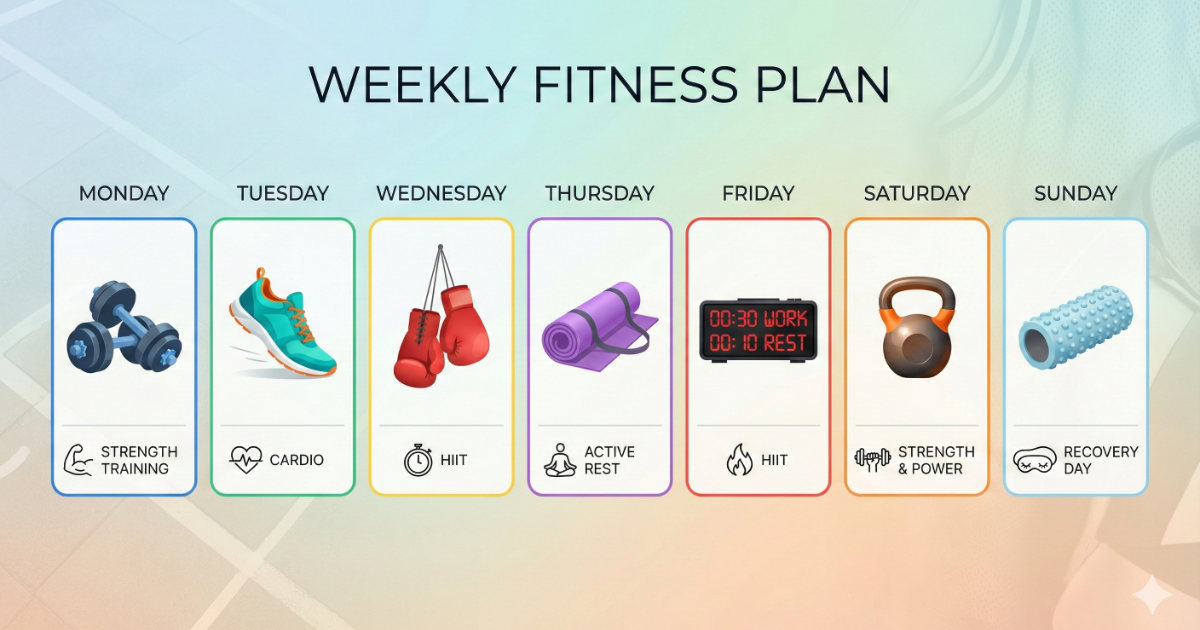
Now that we’ve established that a combination approach is best, you might be wondering how to practically mix cardio and weight training in your week. Here’s a sample weekly schedule I often recommend, which balances both and allows for recovery. This schedule assumes you have about 5-6 days per week to devote to exercise (adjust based on your personal schedule and fitness level):
Monday – Strength Training: Full-body weightlifting session (e.g., squats, presses, rows, etc.). Focus on compound exercises that work multiple muscles. (~45 minutes)
Tuesday – Cardio: Moderate-intensity cardio for about 30–45 minutes (for example, a brisk 3-mile run, cycling, or elliptical). Alternatively, do a HIIT session for a shorter time (~20–25 minutes of intervals).
Wednesday – Strength Training: Another weights session. You could do full-body again or a split (e.g., upper body strength on Wed, lower body on Friday). Keep intensity high to challenge your muscles.
Thursday – Cardio: Lighter cardio or active recovery. For instance, a 30-minute fast walk, a swim, or even a fun activity like a dance class. The idea is to get moving, burn some extra calories, but give your body a break from heavy lifting.
Friday – Strength Training: Third weight training day of the week. If you did full-body Monday and Wednesday, you might target the whole body again but with different exercises. If you’re doing a split routine, hit the muscle groups you haven’t yet (e.g., lower body if you did upper body Wednesday).
Saturday – Combo or Interval Training: This could be a day for a mixed workout. For example, a circuit training session that combines weights and cardio bursts, or a bootcamp/boxing class that has you lifting and jumping around. You could also do another HIIT cardio session here. Aim for 30–45 minutes of high-energy, mixed exercise.
Sunday – Rest or Active Rest: It’s crucial to have at least one rest day. Use Sunday to fully rest, do some gentle yoga, or take a leisurely stroll. Recovery helps your muscles rebuild and prepares you for the next week.
This is just one example – there are many ways to schedule your workouts. The key is that across the week you’re doing both cardio (at least 2–3 sessions) and strength training (at least 2–3 sessions), with enough rest built in (justmovefitnessclub.com). Make sure you accumulate roughly 150+ minutes of aerobic activity per week (that’s the general guideline for health and fat loss) and include two or more strength sessions weekly (justmovefitnessclub.com). You can adjust the plan based on your needs – for instance, if you love classes, maybe Monday is a spin class (cardio) and Tuesday is weight training, etc. The goal is to hit a blend of both types of exercise consistently. Consistency is far more important than any “perfect” split. Stick to a routine like this, and you’ll be creating a powerful fat-burning momentum while building a strong, healthy body.
Why Personal Training Accelerates Fat Loss
Embarking on a fat loss journey with a mix of cardio and weights can be confusing at first. How much of each should you do? Which exercises burn the most fat? This is where personal training can make all the difference. At Galaxy Fit Lab, my team and I specialize in creating customized programs that take the guesswork out of the process. We assess your current fitness, listen to your goals, and design a plan that balances cardio and strength in the optimal way for you. Having a personal trainer means you get expert guidance on form and technique (so you avoid injury and get more out of every workout), and you get an accountability partner to keep you consistent and motivated on those days when motivation flags. In fact, designing the right combined approach can be overwhelming on your own – but a qualified trainer will find the sweet spot between lifting and cardio for you, ensuring you maximize fat loss while still enjoying the process.
Another big advantage of working with a trainer is efficiency. I often see folks spending hours doing random workouts that aren’t really moving the needle. With personal training, every session is laser-focused on your goals. We can push you a bit harder on cardio when you need it, introduce new strength exercises to keep those muscles responding, and adjust the plan each week based on your progress. This kind of individual attention accelerates results – it’s not magic, but it feels like it when you realize you’re losing fat and gaining strength faster than you ever did on your own. Plus, I’ll be right there to celebrate your wins and keep you fired up!
At the end of the day, the combination of cardio and weight training is your fat-loss power duo, and doing it under the guidance of a fitness professional is like strapping a rocket to that duo. If you’re in Naples and serious about transforming your body, I invite you to come train with me at Galaxy Fit Lab. Together, we’ll craft the perfect blend of workouts for your body and keep you accountable every step of the way. Remember, you don’t have to figure it all out alone – I’m here to help you hit those goals. Let’s crush that fat loss journey together!
Sources: Cardio vs Weights Insights (fitandwell.com) (fitfactoryfitness.com); Metabolic Effects of Strength Training (fitandwell.com) (justmovefitnessclub.com); Cardio vs Weight Calorie Burn Data (health.harvard.edu); Research on Exercise & Fat Loss (precisionnutrition.com); Combined Training Benefits (fitfactoryfitness.com) (justmovefitnessclub.com); Personalized Training Advice (fitfactoryfitness.com).